What was the last film you watched?

Willie Oleson

Telly Talk Schemer
LV
9
 
Awards
27
Now for the trailer.
Modern trailers are absolutely the worst. Whenever I watch a "most anticipated films" compilation on youtube I can never remember what I've watched, or where the trailer of film ends and the new one begins (unless the uploader A.I. voice narrates it).
It's beat-for-beat all the same thing, especially the music. All you need to make it complete is a slow coverversion of an upbeat 1980s classic in a whiny-girlie voice.
 

TJP

Telly Talk TV Fanatic
LV
0
 
Awards
7
Note for the "Falcon Crest" fans: Paul Freeman has a special role here playing one of the priests. To be honest I didn´t recognize him (he sports white long hair and beard), until one scene when "war treasures" afloat in a conversation... He was in "Raiders of the Lost Ark" and, of course, as Riebmann / De Bercy on "Falcon Crest". Funny how I needed this subject to identify him... This movie complete his "Raiders" trilogy and, surprise again, . Have you watched this film, @TJP? In Germany its title includes the subtitle of "Der Vatikan Code"!

Not, I haven't, but thanks for the info. I'll have to look for it. I love Paul Freeman's acting. It's such a pity his stint on "Falcon Crest" was cut short and he apparently was pretty displeased about it.
 

Seaviewer

Telly Talk Warrior
LV
9
 
Awards
20
I would have sworn I saw this movie as a kid, but not a single memory was sparked.
I've seen surprisingly few of the Disney animated classics, myself. I just feel like I've seen them all because of the heavy rotation of the hit songs and selected scene clips.
 

Mel O'Drama

Admin
LV
16
 
Awards
44
The Reckoning (2014)

iu


Combining the found-footage genre with the "burnt out alcoholic cop investigates the death of his collegue" trope, this film is everything you'd expect that pairing to be. In short, because it's neither one thing nor the other it doesn't work as well as it should on either level. And the more layers there are, the less it works (there's a heavily-implied soap operatic backstory with an affair between the cop and his female colleague that's further wrecked his home life).

Production-wise it feels very much like a TV movie, and it's fine on that level. The performances are decent and the writing, while not the most innovative, also has its moments with a couple of little twists and turns. It's also Australian, which is a plus in my book.

All in all, a perfectly serviceable gritty thriller. It doesn't complete me, but neither do I regret watching.​
 

Mel O'Drama

Admin
LV
16
 
Awards
44
Death On The Nile (1978)

iu

​


This gets off to a soap-tastic start: heiress Holly Harwood, whose servants include Tom Carrington and Miss Babs from Acorn Antiques, elopes with best friend Alison McKenzie's fiancee Greg Reardon, much to the disapproval of her crooked lawyer, Carter McKay -- and that's all in the first ten minutes!

Oh yes. It felt like every scene was never more than a few degrees away from a soapy connection.


Angela Lansbury is so horribly over the top, she makes Bette Davis and Maggie Smith seem like masters of minimalism in comparison.

Apart from Angela Lansbury's most eccentric character the quirks are relatively mild and yet it could be truly funny sometimes.

Her performance was so terribly hammy and unrestrained it was almost unpleasant to watch. At a certain point I found myself just seeing the Madame puppet in each of her scenes.

It did have the knock-on effect of making other performances seem more right-sized, despite the fact that Bette Davis seemed to be phoning in her performance while Maggie Smith acted for both of them. And their two tremulous voices talking over one another felt quite satirical.

There was an abundance of quite broad performances - from Jack Warden playing Geppetto to I.S. Johar's comic turn as Choudhury - that mostly seemed to work for this piece.

I supposed it was balanced by other characters fading more into the background, overshadowed by the broader turns. Like Jane Birkin's loved-up maid, or Jon Finch and Olivia Hussey', whom I barely noticed until the film was over halfway through.


Maggie Smith, of course, is a fantastic comedy actress and here she plays sort of a pre-Dorothy Zbornak.

Oh, I can (belatedly) see what you mean. There was certainly a barrage of put-downs.


The starriness of the cast sometimes threatens to overpower the story, but once the mechanics of Agatha Christie's plot kicks in (which takes about an hour), it's a very satisfying ride.

Yes. Watching the opening titles, seeing one big name after another was a little overwhelming and far too much to take in at first. There's one terrific early scene where almost the entire cast is in the ballroom watching Holly Harwood and Greg Reardon dance. The camera pans past Angela Lansbury, Bette Davis and Maggie Smith and David Niven, each striking a frozen pose with a monocle or a glass in hand or whatever , with a look of distaste or amusement on their immobile faces. Because they hadn't really interacted, it felt like a tableau or a wax museum. But by the time we get to the final assembly as the truth is revealed it's quite a different story and feels more natural.


Best of all, I guessed whodunnit!

Oh, well done. I was along the right lines with it being a couple, but I was leaning towards Olivia Hussey and Jon Finch... mainly on the basis that they seemed less visible for much of the film.


This scene is so absurd it made me laugh out loud.
1669738278187.png

The prettiest, happiest. lonest couple on top of a pyramid (of sorts) and guess who pops up like a ginger jack-in-the-box-from-hell: Mia Farrow!

As I watched last night, I remembered this comment and found myself smiling before she popped up, knowing it was about to happen.


Linnet Ridgeway played by Lois Chiles (and I kind of want DALLAS' Holly Harwood and KNOTS' Anne Matheson to be cousins) is a perfectly dislikable monster, someone who has it all and still doesn't hesitate to take more at the expense of less fortunate people.
Of course later it turns out that her victims are far from innocent.

I thought it a nice touch that her greed and selfishness were exploited and capitalised upon to become her downfall. This, too, would make a nice twist in a soap.


Nevertheless, the dramatic conclusion is very satisfying.

Yes indeed.
 

Snarky Oracle!

Telly Talk Supreme
LV
8
 
Awards
21
Death On The Nile (1978)

iu

​


Oh yes. It felt like every scene was never more than a few degrees away from a soapy connection.


Her performance was terribly hammy and unrestrained it was almost unpleasant to watch. At a certain point I found myself just seeing the Madame puppet in each of her scenes.

It did have the knock-on effect of making other performances seem more right-sized, despite the fact that Bette Davis seemed to be phoning in her performance while Maggie Smith acted for both of them. And their two tremulous voices talking over one another felt quite satirical.

There was an abundance of quite broad performances - from Jack Warden playing Geppetto to I.S. Johar's comic turn as Choudhury - that mostly seemed to work for this piece.

I supposed it was balanced by other characters fading more into the background, overshadowed by the broader turns. Like Jane Birkin's loved-up maid, or Jon Finch and Olivia Hussey', whom I barely noticed until the film was over halfway through.


Oh, I can (belatedly) see what you mean. There was certainly a barrage of put-downs.


Yes. Watching the opening titles, seeing one big name after another was a little overwhelming and far too much to take in at first. There's one terrific early scene where almost the entire cast is in the ballroom watching Holly Harwood and Greg Reardon dance. The camera pans past Angela Lansbury, Bette Davis and Maggie Smith and David Niven, each striking a frozen pose with a monocle or a glass in hand or whatever , with a look of distaste or amusement on their immobile faces. Because they hadn't really interacted, it felt like a tableau or a wax museum. But by the time we get to the final assembly as the truth is revealed it's quite a different story and feels more natural.


Oh, well done. I was along the right lines with it being a couple, but I was leaning towards Olivia Hussey and Jon Finch... mainly on the basis that they seemed less visible for much of the film.


As I watched last night, I remembered this comment and found myself smiling before she popped up, knowing it was about to happen.


I thought it a nice touch that her greed and selfishness were exploited and capitalised upon to become her downfall. This, too, would make a nice twist in a soap.


Yes indeed.

Mia Farrow is playing herself.

She usually is.
 

Crimson

Telly Talk Enthusiast
LV
2
 
Awards
9
Death On The Nile (1978)

Although the cast is a bit more B-tier than ORIENT EXPRESS, I think NILE is my favorite of the 70s/80s Poirot adaptations. The film benefits enormously from its soapy vibe, whereas ORIENT EXPRESS feels kind of MASTERPIECE THEATER stuffy.

I'll go against the tide here and say that I like Lansbury's performance here. If a soused romance novelist isn't an opportunity for florid overacting I don't know what is.
 

Mel O'Drama

Admin
LV
16
 
Awards
44
The film benefits enormously from its soapy vibe, whereas ORIENT EXPRESS feels kind of MASTERPIECE THEATER stuffy.

Yes, they're apples and oranges, really. I think the darker, more claustrophobic and wintry setting of Orient Express feels more atmospheric and works really well for this genre. But Nile is sunnier and feels more expansive and grand which somehow makes the story feel more palatable and accessible.

Creating an even greater divide are the two quite different interpretations of Poirot, both of which I enjoy in different ways. Albert Finney is closer to the character on the page, but I'm quite fond of Ustinov's more avuncular and jolly take (unlike Agatha Christie who I believe liked Finney's reading of the character but didn't care for Peter Ustinov).
 

Crimson

Telly Talk Enthusiast
LV
2
 
Awards
9
(unlike Agatha Christie who I believe liked Finney's reading of the character but didn't care for Peter Ustinov).

I too recall reading that Agatha Christie expressed some reservations about Ustinov's performance, yet Christie died in '76 and NILE was filmed in '77 ...

I like both ORIENT EXPRESS and NILE so i don't want to knock one at the expense of the other too much. I think Christie's stories are clever but a bit pallid; they need some ham juice pumped into them to prevent them being too staid. Overall, that's why I slightly prefer NILE. I don't think Poirot as the character -- as in Finney's fussy and quirky performance -- works as well as letting some of the supporting suspects ham it up.

But, I love them both even if I slightly favor NILE.
 

Toni

Maximum Member
LV
11
 
Awards
24

Mel O'Drama

Admin
LV
16
 
Awards
44
I too recall reading that Agatha Christie expressed some reservations about Ustinov's performance, yet Christie died in '76 and NILE was filmed in '77 ...

I've managed to retrace my steps and find the webpage that gave me this impression:

[Finney's] portrayal was considered by many to be the definitive Poirot unti David Suchet took up the role. [Murder On The Orient Express] was a very faithful adaptation of the novel and was, at the time, the most successful British film ever made. It received the stamp of approval from Agatha Christie herself. Finney is, so far, the only actor to receive an Academy Award nomination for playing Poirot, though he did not win...

Christie was less sanguine about Ustinov's portrayal, given that Poirot, written as short, slim, and with coal-black hair, bore little resemblance to the tall, heavy, grey-haired Ustinov. When Christie's daughter, Rosalind Hicks, observed to Ustinov that Poirot did not look like him, Ustinov quipped "He does now!"
 

Mel O'Drama

Admin
LV
16
 
Awards
44
The Lady In The Van (2015)

iu


Almost as incredible as this (mostly) true story is, what's even more incredible is that it's had so many lives: a 1989 essay; a 1990 book; a 1999 stage play; a 2009 radio play, and then this film.

Alan Bennett, of course, is the man behind them all, as well as being one of its subjects (well, two or three subjects, really, since his duality is represented here by two Bennetts, as well as the real McCoy making a cameo appearance). Alex Jennings is very convincing as Alan Bennett. The very specific look helps, of course (the glasses, the fair hair, the very specific wardrobe), but not only is Jennings adept at capturing the right inflections and mannerisms (I wasn't sure about the Leeds accent at first, but was quickly won over by the performance as a whole), his features also greatly resemble those of the person he's playing.

The film is also Maggie Smith's third outing as the eponymous character. Having previously done the stage and radio plays, she had a history with the part going back a decade and a half.

It's a triumph for both, with no shortage of Bennett's wry and memorable dialogue ("Who are you, coming in here and asking if the Archbishop likes meringues?", an incredulous nun asks Bennett at one point). As far as Maggie Smith goes, it's a truly great performance. It's as unglamorous as it gets, which I'm guessing she loved. Much is made of the woman's body odour and unsanitary habits, with her excrement popping up in the most unlikely places. But her every line and every look fascinates, and there's a great depth to it all that's true compelling. The balance of comedy and tragedy is as perfectly artful as it gets so it hits the right note every time.

There's a wealth of familiar faces, from Frances de la Tour as Ursula Vaughan Williams (Mrs Ralph Vaughan Williams) to Gwen Taylor as Bennett's Mam. Jim Broadbent's there, too. As is Rosalind Knight, best known to be for some British films of the late Fifties and early Sixties (most notably a couple of Carry Ons) . And then almost the entire cast of The History Boys appear in cameos.

It's a really lovely film that perfectly captures time and place (the passing of time marked by details such as the cars providing the street furniture, or Bennett's changing spectacles) while at the same time being timeless and universal.

I'd definitely be up for a second look at this at some point, and it's also reminded me that I need to explore more of Alan's works. A DVD with six of his plays currently sits unopened on my shelf, while I've been eyeing up some of his other material for some time.


​
Yes that's precisely what I recall reading -- I'm just not clear how the timeline works out if Christie died a year before Ustinov played the role!

Same here. It's certainly a mystery.

The page mentions Christie's daughter making a comment to Ustinov, so perhaps that was in some way interpreted as an official statement from the estate, which has come to be (mis)interpreted as the view of Agatha herself. It's all guesswork, though.


Perhaps she was still alive to hear of his casting even if she had died before filming began.

This is also possible, I suppose. If it is the case, it must have been telegraphed well in advance, since Christie died in January 1976 and it looks like shooting commenced in late 1977.

I suppose it's also possible there was speculation about who might play Poirot in future films, just as people speculate today about who might play the next Bond or Batman.
 

Julia's Gun

Telly Talk Well-Known Member
LV
3
 
Awards
10

Almost as incredible as this (mostly) true story is, what's even more incredible is that it's had so many lives: a 1989 essay; a 1990 book; a 1999 stage play; a 2009 radio play, and then this film.

I'd definitely be up for a second look at this at some point, and it's also reminded me that I need to explore more of Alan's works. A DVD with six of his plays currently sits unopened on my shelf, while I've been eyeing up some of his other material for some time.​

I read Lady in the Van in its original incarnation in Writing Home, many years ago, and followed all the incarnations.
It is remarkable how she just turned up outside his house and how he tolerated her for years. He says the smell from the van was often disgusting, but he developed this peculiarly touching relationship with her.

Do explore some of his other works too. A Question of Attribution has Prunella Scales playing one of the most convincing portrayals of the late Queen I can remember seeing.
 
Last edited:

Willie Oleson

Telly Talk Schemer
LV
9
 
Awards
27
THE MAN WHO HAUNTED HIMSELF (1970)

1737595722197.png

At long last I found a new copy but was a little alarmed by the Network label. They never do subtitles and I have a long history of Network DVDs behaving very temperamentally.
Luckily, no problems at all this time, and there are subtitles that helps me to decipher the muffled and/or floridly old-fashioned British dialogue.
Quite bizarrely, the DVD is housed in a slim case, something I had previously only seen as part of a collection or box set (e.g. Knots Landing, Falcon Crest).
And perhaps this is also the case (no pun intended) for TMWHH because the image posted here shows bluray and dvd and the one I have only has the DVD logo on it.

I guess I could say something about the film....

The story opens with Roger Moore as boardroom executive Harold Pelham driving his car, unfastens his seat belt and starts to drive fast and recklessly.
The grimace on his face plus the visual overlapping with a different car strongly hints at a supernatural force taking over Pelham's behaviour.
Not surprisingly this journey ends with a crash. It doesn't look too exciting - some traffic cones get smashed in the process.
He almost dies in surgery but is revived with two different heartbeats.
The story makes a post-recovery time jump and that's when things become very complicated for Pelham. He's been in places and has said or done things he can't explain.
Since these events contradict what we see on screen it's kinda obvious that there is in fact a physical doppelganger wheeling and dealing and sleazing on behalf of our confused protagonist.
Still, the story leaves enough room for themes like short-term amnesia or gaslighting, and eventually Harold Pelham ends up on the couch, so to speak.

The psychiatrist is...similar to how a gay man or French person would be portrayed in a British film from the 1970s. Very colourful. In fact, I kept thinking of Dr. Lawrence Jacoby from Twin Peaks.
Nevertheless, this therapy session reveals the possibility of an internal, sociological conflict. Harold's impersonator is the man Harold wants to be: the confident, greedy, pre-eighties yuppie without scruples. So here we have a distinctive 1970s connection with Man At The Top and Colin Baker in The Brothers.
The only reason why both Pelham and I refuse to buy into it is because we're too focused on the thriller aspect of the story. It's got to be something more sinister than that.
In the film's final act it does indeed seem like a case of supernatural villainy, including the wrong man being accused of the identity theft.
But then New Harold explains to Old Harold that Old Harold wasn't supposed to have survived the accident, and when Old Harold dies (or disappears?) in the second car chase, New Harold grabs his chest as if he's losing one of the two hearbeats. But we don't know which one...

And so it turns out that the wacky psychiatrist was right after all. Conventional, suburban Harold wanted to break free from his midlife crisis.
The ending could also suggest, in a "It's A Wonderful Life" sort of way, that it was Old Harold who survived the second accident and regained his personality.

On Her Majesty's Secret Service gets mentioned, by Roger himself, and perhaps it capitalised on George Lazenby's peculiar introduction in that Bond film, or the idea that Roger Moore was considered for the role (before he did it a few years later). It's always nice to overthink stuff, isn't it.

The DVD has the loveliest special feature I've ever seen: a 34 minutes suite of Michael J. Lewis' original score.
In the film, that score also came from an LP record.
1737602767656.png
Of course. A Souvenirs From Greece, how very Euro seventies.

All things considered, the film's a nice pastime but it hasn't aged wonderfully. The theme had been done before and has been done after TMWHH but that shouldn't be an obstacle, imo. I've seen hundreds of Get Carters before I saw the film from 1971, and yet that seventies film sizzles with authentic menace and sleaze.
TMWHH isn't "sexy" enough and doesn't look particularly cinematic - except for the traffic cones,of course.
I don't think I'll put it on the shelf....which inadvertently solves the problem of the funny-looking DVD case.
 

Seaviewer

Telly Talk Warrior
LV
9
 
Awards
20
A Dog's Journey (2019)
This is one of those sequels that doesn't really need to exist, but is nonetheless a pleasant way to spend a couple of hours.
I still think the fantasy aspects sit rather uneasily with the dramatic plotlines, but I knew what to expect this time so it wasn't as jarring.
 

Toni

Maximum Member
LV
11
 
Awards
24
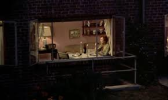
I re-watched a Hitchcock classic this last week: "Rear Window". Starring James Stewart, Grace Kelly and the amazing Thelma Ritter.

1738021927404.png
Yes, in Spain it was titled "The Indiscreet Window", for once better than the original title.
​
I had seen this one multiple times, in English and Spanish, but this time I was terrified at how awful the translation of some lines were. As you may know, this is one of 5 movies that Hitch "left" to his daughter Pat and were not screened for decades, along with others from the same period. Since the Spanish dialogue score probably was damaged (or heavily, pettily censored), it was re-dubbed for the re-release and TV airings at mid-80s. The dubbing casting was great, but I just couldn´t believe the way some of the words were translated, or maybe it was "professional deformation" from moi...

1738022355800.png
Not a spoiler: this is probably the most heartbreaking
moment in the whole movie.​

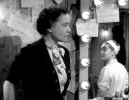
Aside from that, I liked it as much as the first time I saw it. It´s not one of my 5 Hitch favs, but I find it impeccable and more a concept movie à la "Rope" than the telling of a suspenseful story, not that there is not suspense in it. The main characters are quickly introduced and defined, and the stars just use their talents to connect with the audience, and probably Ritter is the one who manages to get the most out of her character. She might as well have been Birdy from "All About Eve" doing a supplementary job after-hours after attending Margo Channing...

1738022017397.png
"Now I´m leaving, Margo. If you b**** paid me
enough, I shouldn´t have to moonlight as a nurse,
and keep an eye on that Eve slut!"
​

Kelly never looked lovelier and Stewart never acted naughtier, which was a great combination. The new conclusion I got to was that it´s a "vignette movie" with a string of comic strips, and a lot of ongoing stories put through a prism of black comedy and candid voyeurism. I was surprised at how lightly the murder plot was taken, and how quickly was swept under the rug at the end. The murderer also looked like a caricature... and eventually, you realize that it´s a minimalist masterpiece.... or two hours of (kinda) sexy entertainment. Very recommendable.

1738022169132.png
I lol´d when Princess Grace showed up
wearing this Angelica Nero outfit...​

Here is a very interesting documentary (subtitled in Spanish but spoken in English) about the movie. Enjoy it!

 
Last edited:

Mel O'Drama

Admin
LV
16
 
Awards
44
I read Lady in the Van in its original incarnation in Writing Home, many years ago, and followed all the incarnations.

What a fascinating exercise. Do you have a preferred incarnation, and are there any significant differences between versions (other than the book presumably containing more detail than the essay or stage, screen and radio versions)?


Do explore some of his other works too. A Question of Attribution has Prunella Scales playing one of the most convincing portrayals of the late Queen I can remember seeing.

Thanks. Every time I read Alan Bennett's name I feel a pang of guilt that I'm not more familiar with his works.


Since the Spanish dialogue score probably was damaged (or heavily, pettily censored), it was re-dubbed for the re-release and TV airings at mid-80s. The dubbing casting was great, but I just couldn´t believe the way some of the words were translated

I love how international versions of films come with their own stories and, from what you say, their own politics and troubles. Now I'm curious about "heavily, pettily censored" films that you've seen. And I'm also intrigued by the curious translation even in the re-dubbed version, and how this affected the story.


It´s not one of my 5 Hitch favs, but I find it impeccable and more a concept movie à la "Rope" than the telling of a suspenseful story

Twenty years ago when I first thoroughly explored Hitch's works I remember Rear Window being my favourite. I'm not sure it would be today, but I'd say it's a contender for a Top Five.

I'd agree with it being a concept movie, and that's why it appeals to me so much. Like Rope, what really grabs me is the theatrical tone, with all of it taking place on one set and seen from one person's perspective. Both feel like they're adapted from stage plays. There's a sense of artifice and they're clearly on sets, but the viewer quickly becomes immersed in this alternative world.


The new conclusion I got to was that it´s a "vignette movie" with a string of comic strips, and a lot of ongoing stories put through a prism of black comedy and candid voyeurism.

Yes. It's quite soap operatic as well. I've wondered if this concept might adapt to an ongoing series, with each season focussing on a very specific sequence of events, and each episode seen from a different resident's POV.


I was surprised at how lightly the murder plot was taken, and how quickly was swept under the rug at the end.

Yes, it feels quite irreverent, which adds another layer to it. I love the scene where Thelma Ritter casually talks about how he would need to use the bathtub to chop up the body, and it feels as though she's enjoying it.

All three of the main characters begin enjoying themselves as things unfold. Something exciting is happening to them, and they don't disguise that enjoyment out of moral propriety or societal expectation. In that regard it's very politically incorrect, which makes it refreshing (certainly by today's standards) and hugely enjoyable.
 
Top