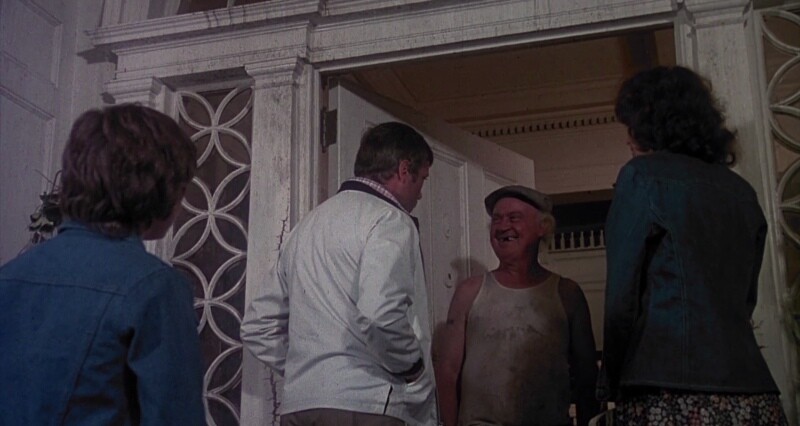
An impressive cast in a rather less impressive film that feels like a test run for various better projects such as The Shining and The Amityville Horror.
Everything about it feels horribly dated. The production values give it a schlocky TV movie feel. Quiet dialogue scenes feel at times like a bit of a chore and endless in a daytime soap kind of way. These are broken up by dramatic sequences that are intense and loud and shrill as only films of this era can be. And it all leads to a "what the hell did I just watch" kind of non-ending.
I can't tell if good editing is improving bad performances or bad editing is spoiling great performances. Oliver Reed and Bette Davis seem really good at times while at others Davis in particular seems to be phoning her performance in. Karen Black is an actress that I frequently find unintentionally funny anyway. The mobile face emotes fear or concern or whatever, while the delivery and body language make her seem disinterested and insincere at all times, almost as though she doesn't understand English and is reciting her dialogue phonetically without giving it any meaning. She's given an awful lot to do in this one, taking top billing over Oliver Reed!
The title makes it sound like a comedy, and I'm still not sure it wasn't.
Karen Black is an actress that I frequently find unintentionally funny anyway. The mobile face emotes fear or concern or whatever, while the delivery and body language make her seem disinterested and insincere at all times, almost as though she doesn't understand English and is reciting her dialogue phonetically without giving it any meaning
Oh, that's a shame. I watched it on Prime if that's any help.
On the plus side I will add that The Chauffeur is one of the creepiest characters on film. He doesn't even say anything, and he's all the more chilling for it:
Dub Taylor was Fireman Wally in the Casey Jones TV series and a familiar face in sitcoms of the 60s or so, but I'm surprised to see him get such prominent billing.
The Spy With My Face (1965)
The second theatrical release for The Man From U.N.C.L.E.
Also not a particularly original premise - the old "evil twin with plastic surgery" bit - but they pull it off with the usual U.N.C.L.E. flair.
The placement of the additional footage isn't as obvious as in the previous effort but there's a shower scene which, although tame by today's standards, wouldn't have made it onto TV in the 60s.
Dub Taylor was Fireman Wally in the Casey Jones TV series and a familiar face in sitcoms of the 60s or so, but I'm surprised to see him get such prominent billing.
The film had a very small cast. Dub - along with Burgess Meredith and Eileen Heckart - had a cough and a spit in the opening ten minutes. After that the focus was almost entirely on the other four, barring the occasional flashback or funeral scene.
Another weird one. It feels like an episode of Degrassi Junior High gone awry. With Knots Landing Season 3-8 font for all the credits. And a liberal smattering of panpipes.
Stand in front of a mirror and say "Candyman" five times and you will summons him and he will kill you. That is the premise of this film which is a horror that is more than just a gore-fest but has a strong narrative throughout and has some genuinely scary and tense moments. Far from the best horror film I've seen but one that I enjoyed watching.
Stand in front of a mirror and say "Candyman" five times and you will summons him and he will kill you. That is the premise of this film which is a horror that is more than just a gore-fest but has a strong narrative throughout and has some genuinely scary and tense moments.
At the time I watched the original back in the early Nineties I hadn't watched too many horrors and I was so creeped out by it I've never wanted to revisit it. I suspect I'd find it a lot less impactful now, but perhaps it would still get to me by association.
At the time I watched the original back in the early Nineties I hadn't watched too many horrors and I was so creeped out by it I've never wanted to revisit it. I suspect I'd find it a lot less impactful now, but perhaps it would still get to me by association.
I've not seen the original and this new film is meant to be a continuation from the original story rather than a remake.
I did wonder how many people watching this film would have refused to say Candyman 5 times in front of a mirror, just in case something happened to them. I'm not a superstitious person but I wouldn't do it, well there's no point in tempting fate.
I did wonder how many people watching this film would have refused to say Candyman 5 times in front of a mirror, just in case something happened to them. I'm not a superstitious person but I wouldn't do it, well there's no point in tempting fate.
Yes, it's a direct sequel to the original Candyman film but not having seen any of the earlier Candyman films, I don't know if they acknowledged anything from the previous sequels.
Why do I have this feeling that it didn't end well for them?
Incidentally, there's a scene in Urban Legend where a couple of girls do something similar by repeating the phrase "Bloody Mary"*, so I suppose they're both variations on the same legend.
*There was also a godawful straight to video sequel called Urban Legends: Bloody Mary, but the less said about that the better.
It's quite some years since I last watched it, and longer still since I watched it in isolation rather than as part of a chronological rewatch of HItch's films.
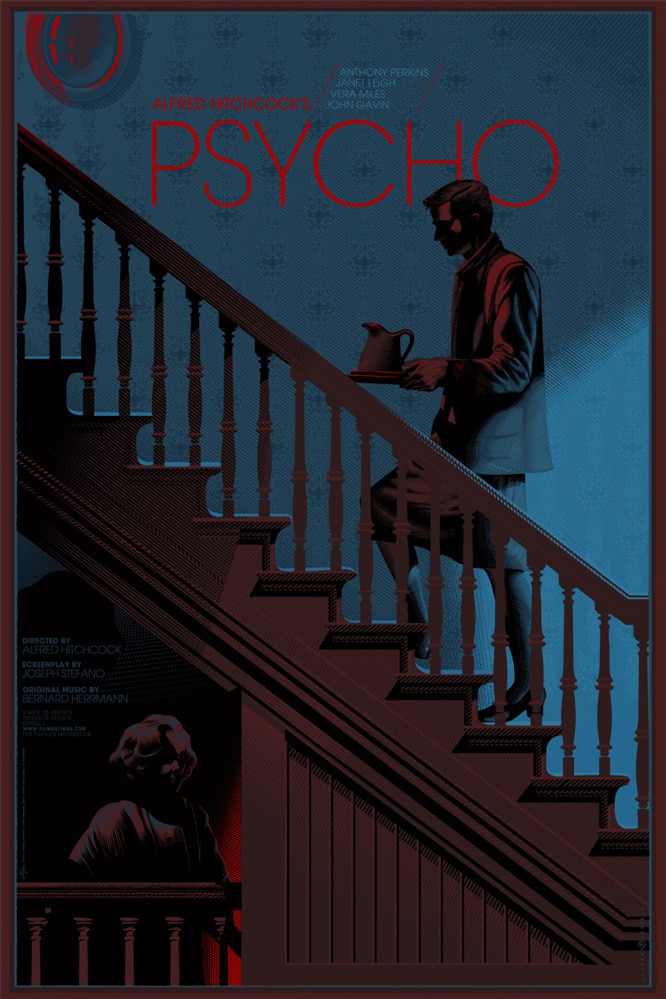
It holds up as well as ever. Anthony Perkins makes Norman Bates fascinating and likeable with his insecurities and nervous laugh and mispronunciations. Janet Leigh is a commanding presence and Vera Miles makes Lila Crane nice and ballsy. I also love the casting of character actors for smaller roles: from the woman who wants to give the ants a painless death; to the sheriff's wife who takes a liking to Sam Loomis and lowers her voice when mentioning a couple "in bed"; to Hitch's daughter Pat as Marion's colleague who popped tranquillisers on her wedding night and blames her wedding ring for not being flirted with.
The structure of the film is fascinating. It switches focus, protagonists and even genres with each new act without breaking stride or feeling disjointed. Each shift feels natural and right and fascinating.
well the film is a f... masterpiece but not my favorite Hitch film that would be North By Northwest (1959) that's my favorite of his anyways.
i bought The November Man (2014) the other night at Dollar Tree of all places and i enjoyed the hell out of it when i watched it late last night 10/10
I'm pretty sure I've only seen this once before, and that was many years ago. Blessed with a terrible memory, I couldn't remember a thing about it other than both Anthony Perkins and Vera Miles returned. This meant there were a few little twists that genuinely surprised me.
All these years on from the original and it's clear that this is a very different animal. It lacked the divergence of the first film where we were thrown off about who's story we were following. Apart from a couple of short scenes with Lila Loomis (née Crane. She married her sister's lover which is a tad icky), this was entirely Norman's story. Arguably as it should be, since the original was ultimately his film. But the first time round, we saw him through the eyes of others, whereas this time we saw things through his eyes far more. He's played incredibly well by Anthony Perkins and remains fascinating, but ultimately what's known is always going to be that much less frightening and fascinating than what's not known.
That said, there was a new variety of unknown with the question of just how sane Norman now is: something that's not fully shared with the audience. Norman was a very likeable, vulnerable and fragile character in the original and I appreciated that this was built on. As things progressed and he inevitably questioned his sanity, I was rooting for him to recover, while at the same time excited to see what would happen when he didn't. I really liked the angle of Norman trying to find his place in the world after being released from psychiatric care. This aspect felt very real and would have made for an interesting film even without the obligatory slasher elements.
There were some great character actors involved who brought out really interesting colours in Anthony Perkins. Hugh Gillin as the Sheriff was terrific, as was Robert Loggia as Norman's doctor (kind of analogous with Halloween's Dr Loomis, but this time you really sense that the doctor cares for and connects with his patient).
At times I was reminded of the middle act of When A Stranger Calls where it diverged into a story of a frail, vulnerable man finding the world a cruel place, with Psycho II's diner in place of When A Stranger Calls' seedy bar.
I'm really not sure about Meg Tilly. She's pretty and sweet and likeable, which all worked in the character's favour. And she cries well. But her delivery seemed to lack punctuation and sometimes felt like she was spitting out all the words before she forgot them and couldn't afford to stop for breath. I wonder if Jamie Lee Curtis was considered for this role. It would have been a nice touch.
There were a number of soapy revelations. Some kind of worked.
I gave a little gasp when it was revealed that "Mary Samuels" was Lila and Sam's daughter. Which resolved my irritation that her name was "coincidentally" too similar to the "Marie Samuels" pseudonym Marion used in the original. Though it has to be said that this revelation did nothing for any of the characters. Lila in particular felt too one-dimensional, angry and vengeful this time round. She was positively unlikeable.
Some didn't work at all. Did Norman really need
another dead mother? And did we need to find out that his mother from the original wasn't his mother but his aunt?
It's just too silly. Ultimately, all these revelations gilded the lily.
It's also evident that the series is playing catchup with the Eighties slasher franchises. At this point, Halloween, Friday The 13th and The Omen were up to their third instalments. And while this is nowhere near as tacky as the Friday The 13th series, it comes across strongly in moments of violence that this is the crowd they're pitching to. The "creative" kills come across as derivative and a little desperate. And, to Twenty First century eyes, far more dated than Marion's shower scene. The graphic
knife-down-the-throat moment of Lila's
death is incredibly undignified for such a character and it amazes me that nobody involved appeared to recognise this.
But none of the downsides stopped this from being a watchable and interesting revisit to that character and that motel. Otherwise, we'd always have wondered.
Oh, and Jerry Goldsmith's score - wisely going in a different direction from Bernard Herrmann's strings - is gorgeous. I've been listening to it quite a bit in recent weeks.
I'm pretty sure I've only seen this once before, and that was many years ago. Blessed with a terrible memory, I couldn't remember a thing about it other than both Anthony Perkins and Vera Miles returned. This meant there were a few little twists that genuinely surprised me.
All these years on from the original and it's clear that this is a very different animal. It lacked the divergence of the first film where we were thrown off about who's story we were following. Apart from a couple of short scenes with Lila Loomis (née Crane. She married her sister's lover which is a tad icky), this was entirely Norman's story. Arguably as it should be, since the original was ultimately his film. But the first time round, we saw him through the eyes of others, whereas this time we saw things through his eyes far more. He's played incredibly well by Anthony Perkins and remains fascinating, but ultimately what's known is always going to be that much less frightening and fascinating than what's not known.
That said, there was a new variety of unknown with the question of just how sane Norman now is: something that's not fully shared with the audience. Norman was a very likeable, vulnerable and fragile character in the original and I appreciated that this was built on. As things progressed and he inevitably questioned his sanity, I was rooting for him to recover, while at the same time excited to see what would happen when he didn't. I really liked the angle of Norman trying to find his place in the world after being released from psychiatric care. This aspect felt very real and would have made for an interesting film even without the obligatory slasher elements.
There were some great character actors involved who brought out really interesting colours in Anthony Perkins. Hugh Gillin as the Sheriff was terrific, as was Robert Loggia as Norman's doctor (kind of analogous with Halloween's Dr Loomis, but this time you really sense that the doctor cares for and connects with his patient).
At times I was reminded of the middle act of When A Stranger Calls where it diverged into a story of a frail, vulnerable man finding the world a cruel place, with Psycho II's diner in place of When A Stranger Calls' seedy bar.
I'm really not sure about Meg Tilly. She's pretty and sweet and likeable, which all worked in the character's favour. And she cries well. But her delivery seemed to lack punctuation and sometimes felt like she was spitting out all the words before she forgot them and couldn't afford to stop for breath. I wonder if Jamie Lee Curtis was considered for this role. It would have been a nice touch.
There were a number of soapy revelations. Some kind of worked.
I gave a little gasp when it was revealed that "Mary Samuels" was Lila and Sam's daughter. Which resolved my irritation that her name was "coincidentally" too similar to the "Marie Samuels" pseudonym Marion used in the original. Though it has to be said that this revelation did nothing for any of the characters. Lila in particular felt too one-dimensional, angry and vengeful this time round. She was positively unlikeable.
Some didn't work at all. Did Norman really need
another dead mother? And did we need to find out that his mother from the original wasn't his mother but his aunt?
It's just too silly. Ultimately, all these revelations gilded the lily.
It's also evident that the series is playing catchup with the Eighties slasher franchises. At this point, Halloween, Friday The 13th and The Omen were up to their third instalments. And while this is nowhere near as tacky as the Friday The 13th series, it comes across strongly in moments of violence that this is the crowd they're pitching to. The "creative" kills come across as derivative and a little desperate. And, to Twenty First century eyes, far more dated than Marion's shower scene. The graphic
knife-down-the-throat moment of Lila's
death is incredibly undignified for such a character and it amazes me that nobody involved appeared to recognise this.
But none of the downsides stopped this from being a watchable and interesting revisit to that character and that motel. Otherwise, we'd always have wondered.
Oh, and Jerry Goldsmith's score - wisely going in a different direction from Bernard Herrmann's strings - is gorgeous. I've been listening to it quite a bit in recent weeks.
I had low expectations for this film when I saw it shortly after it was released because it original film was so iconic and so well loved that a sequel was always going to seem like unnecessary and just a way of cashing in on the Hitchcock film. However, I thought it was a pretty good film with some nice twists and shocking moments. I didn't like Psycho III though.
This site uses cookies to help personalise content, tailor your experience and to keep you logged in if you register.
By continuing to use this site, you are consenting to our use of cookies.