What was the last film you watched?

Willie Oleson

Telly Talk Schemer
LV
9
 
Awards
27
Even when the height wasn't being shown, I felt sickened just by knowing we might be shown it at any time.
Funny how that works. Most people who are in good physical condition can climb a ladder without being physically affected by the gravity. When you fall you fall, there's no difference between the bottom and the top of the ladder. Naturally, the height will impact the result of the fall.
It's the visual aspect that makes one aware of the gravity, and the anxiety and insecurity comes from the question "will I be able to resist looking down".
We usually don't do that when we step on a kitchen ladder because we don't need to see our safety confirmed.

I'm having a flashback to a childhood memory of climbing the stairs of a monument in Luxembourg or Belgium (just checked Waterloo on youtube but I don't remember it being that big or isolated from the city) and as kids we practically ran up the steps without thinking about our safety.
We reached the top and then we had to go back (which is why I find it such a pointless activity) but when I started to walk down I suddenly became very aware of the distance between 9 years old me and ground level. It's almost as if those many steps tempted me to voluntarily keel over. Maybe it was a Haunted Stairs (that would happen to me) and I think that's when the fear started.
 
Last edited:

James from London

International Treasure
LV
6
 
Awards
18
I watched this last week while working through my Things to Watch on YouTube Before I Die list.

Victor Mature and Diana Dors star in a downbeat British film noir from 1957 about long distance lorry drivers. The contrast between the two glamorous leads and their gloomy surroundings works really well. They're great and it's great (and the picture quality's great).

 
Last edited:

Willie Oleson

Telly Talk Schemer
LV
9
 
Awards
27
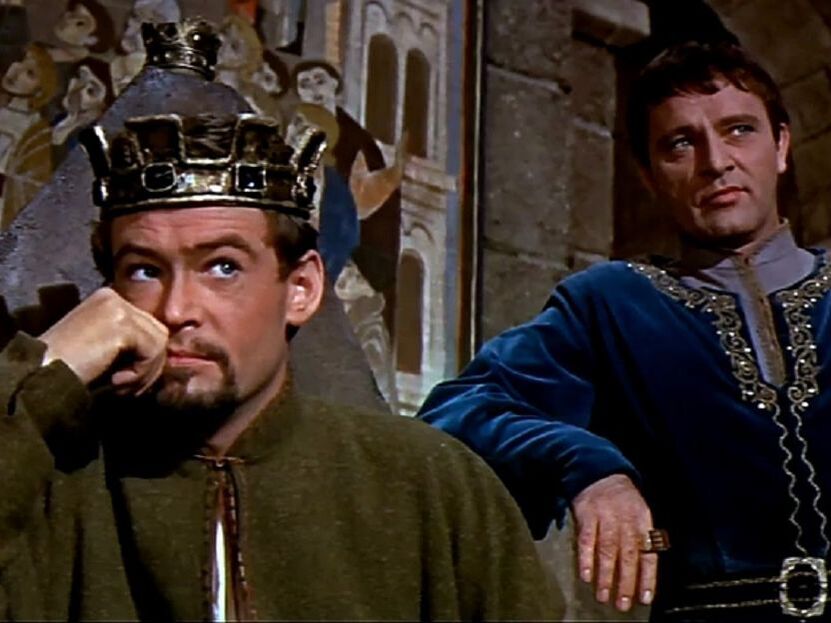
BECKET (1964)

1748796381176.png

A political drama about the friendship between King Henry II and his Lord Chancellor and cofidant Thomas Becket, and because of my personal chronological watching order I've watched it as a prequel to The Lion In Winter.
"Peter O'Toole actually looks younger in Becket. How did they do that, it's amazing!".

Frustrated by the power of the Church and its unwillingness to support his military coups in France, Henry seizes the opportunity when the Archbishop of Canterbury dies.
He appoints Thomas as the new Archbishop despite Thomas' plea not to do it, and then it doesn't take long before the whole scheme backfires.
It's possible that I'm misreading the situation but I wondered if Henry's decision to give Thomas that kind of power was also some kind of test of their friendship.
Most of it seems to be based on compromise: Thomas is embittered by his pragmatic attitude scorned by his fellow Saxons, and Henry in all his mighty Majesty constantly wants to see their friendship being validated.
Had the story taken a more fantastical approach then it wouldn't surprise me if the King himself had orchestrated the religous/political dilemma to test Becket's loyalty.
While Becket's handling of the controversy puts Henry in a difficult situation, especially if the Pope gets involved, it's the realisation that he's no longer Becket's Number One that seems to control Henry's actions. And all of that wouldn't be so difficult if he actually hated his former friend - but he still loves him.

This is very much a performance film and the actors are given great material to work with.
Peter O'Toole is simply magnificent in his larger than life interpretation of the drama king, and the script is riddled with dry humour and brutal insults, like a Shakespeare for dummies like me.
There's nothing in the film that confirms any romantic feelings between the two friends but it certainly doesn't shy away from that very interpretation.
Of course it's possible that a 1964 audience wouldn't even consider it, let alone fantasise about it.
Becket made me think of that other loyalty-to-a-Henry conflict in A Man For All Seasons, but also of DALLAS.
Jock wants his sons to have power and run the company but he doesn't allow them to become creative or opinionated. And he was also very good at insulting his family.
 

Mel O'Drama

Admin
LV
16
 
Awards
44
It's the visual aspect that makes one aware of the gravity, and the anxiety and insecurity comes from the question "will I be able to resist looking down".

Yes. It's akin to many people who describe being at a great height - on a cliff edge or bridge or at the top of a building - and almost feeling some force pulling them over. It's natural to want to see what's beneath us in that situation, but I suppose sometimes we wish we hadn't, and it taps into something primal within us (we all have those dreams of falling, don't we? And that must mean... something).

Newer films are definitely better at capturing this sense for me. Perhaps it's the improved picture quality, where one experiences these moments in high definition. Perhaps it's changing technology. I think a shot taken from a helicopter - as would have been the norm until recent years - can often look almost relaxing and familiar, whereas a drone shot captures angles and images a helicopter never could.


We reached the top and then we had to go back (which is why I find it such a pointless activity) but when I started to walk down I suddenly became very aware of the distance between 9 years old me and ground level. It's almost as if those many steps tempted me to voluntarily keel over. Maybe it was a Haunted Stairs (that would happen to me) and I think that's when the fear started.

How interesting that you can remember a specific moment as the catalyst.

It's a great point about being a kid and kind of oblivious to the safety or the potential danger. For me, I've become affected by heights as I've aged. Even as a younger adult, I was never bothered by them. Even a decade ago I could happily climb the steep narrow stone steps in a tall, rickety old tower in the city I was (then) living and take in the views leaning on the edge of the tiny balcony. Nowadays I'd struggle with that.


Victor Mature and Diana Dors in a downbeat British film noir from 1957 about long distance lorry drivers. The contrast between the two glamorous leads and their gloomy surroundings works really well. They're great and it's great (and the picture quality's great).

That looks up my street. I'll have to add it to my own bucket list. I was surprised at how few names I recognised for a British film made in 1957. I think I can count them on one hand. I'm sure I'd recognise faces, though.
 

James from London

International Treasure
LV
6
 
Awards
18
I was surprised at how few names I recognised for a British film made in 1957. I think I can count them on one hand. I'm sure I'd recognise faces, though.
Apart from the two "names", I don't think I recognised anybody*. And I've no idea how such a huge slab of '50s Hollywood beefcake as Victor Mature wound up in such a (seemingly) low-budget British flick as this. Meanwhile, Diana Dors' film career has always been something of an unexplored mystery to me. All of which kinds of ends up feeding into the intrigue of the film itself.

*Blink and you miss them appearances by Norman Rossington and Sam Kydd aside.
 
Last edited:

Mel O'Drama

Admin
LV
16
 
Awards
44
*Blink and you miss them appearances by Norman Rossington and Sam Kydd aside.

Yes, those are the two other names I recognised, along with Arthur Mullard "as minor role".


Diana Dors' film career has always been something of an unexplored mystery to me.

Same here. I watched one of her later films not so long ago: a sex comedy called Keep It Up Downstairs. It was not great. That's possibly the only DD film I've watched.

My main association of her is from TV in The Two Ronnies' serial The Worm That Turned. This has also reminded me that I'm bit peeved I never bought Queenie's Castle when Network was still alive and kicking.
 

James from London

International Treasure
LV
6
 
Awards
18
I watched one of her later films not so long ago: a sex comedy called Keep It Up Downstairs. It was not great. That's possibly the only DD film I've watched.

I've only ever heard great things about 'Yield to the Night'. That appears to be the definitive Dors classic.
 

Snarky Oracle!

Telly Talk Supreme
LV
8
 
Awards
21
BECKET (1964)

View attachment 56442

A political drama about the friendship between King Henry II and his Lord Chancellor and cofidant Thomas Becket, and because of my personal chronological watching order I've watched it as a prequel to The Lion In Winter.
"Peter O'Toole actually looks younger in Becket. How did they do that, it's amazing!".

Frustrated by the power of the Church and its unwillingness to support his military coups in France, Henry seizes the opportunity when the Archbishop of Canterbury dies.
He appoints Thomas as the new Archbishop despite Thomas' plea not to do it, and then it doesn't take long before the whole scheme backfires.
It's possible that I'm misreading the situation but I wondered if Henry's decision to give Thomas that kind of power was also some kind of test of their friendship.
Most of it seems to be based on compromise: Thomas is embittered by his pragmatic attitude scorned by his fellow Saxons, and Henry in all his mighty Majesty constantly wants to see their friendship being validated.
Had the story taken a more fantastical approach then it wouldn't surprise me if the King himself had orchestrated the religous/political dilemma to test Becket's loyalty.
While Becket's handling of the controversy puts Henry in a difficult situation, especially if the Pope gets involved, it's the realisation that he's no longer Becket's Number One that seems to control Henry's actions. And all of that wouldn't be so difficult if he actually hated his former friend - but he still loves him.

This is very much a performance film and the actors are given great material to work with.
Peter O'Toole is simply magnificent in his larger than life interpretation of the drama king, and the script is riddled with dry humour and brutal insults, like a Shakespeare for dummies like me.
There's nothing in the film that confirms any romantic feelings between the two friends but it certainly doesn't shy away from that very interpretation.
Of course it's possible that a 1964 audience wouldn't even consider it, let alone fantasise about it.
Becket made me think of that other loyalty-to-a-Henry conflict in A Man For All Seasons, but also of DALLAS.
Jock wants his sons to have power and run the company but he doesn't allow them to become creative or opinionated. And he was also very good at insulting his family.

Peter O'Toole, he of the double-phallic name (much like Roddy McDowall), made no boners about the homoerotic undercurrents of BECKET.

I first saw BECKET as a teenager and was, initially, rather bored by it -- and even at that age, I wasn't normally put off by turgid dialogue films, but it totally didn't work for me, this much-ballyhooed picture... Which is notable, because I don't tend to change my tastes or opinions on film terribly much. But BECKET has been different: by my forties, my appreciation for the film has skyrocketed; its cold, Halloweenish hollowness (and I mean that in a good way) is transfixing to me now, a bit like a cinematic seance.

LION IN WINTER has even more operatic repartee, and I've learned both pictures have a rabid pro-and-anti fanbase: some dismiss LION as garish and vulgar "trash" and regard BECKET as noble art... I think that clannish, binary thinking is kind of ridiculous, as both films are brilliant, albeit with an obviously different tone.

becket-still.jpg
 

Willie Oleson

Telly Talk Schemer
LV
9
 
Awards
27
I've only ever heard great things about 'Yield to the Night'.
That film, and her guest appearances in several thriller/horror anthology episodes is the only thing I've seen of DD aka the British answer to MM.
There's also a biopic film on you-know-where, The Blonde Bombshell. I planned to watch it but somehow it hasn't happened yet.
 

Willie Oleson

Telly Talk Schemer
LV
9
 
Awards
27
DAYS OF WINE AND ROSES (1962)

1748878351435.png

Jack Lemmon is one of those actors who can make his performances look as if they're completely improvised, and yet I've never enjoyed him in the comedy films he's made.
He's so naturally funny that it almost clashes with the comedy dialogue and situations, there just isn't enough room for both of them.
Thankfully he's also done straight drama like this film, and that's where his comedic talent can explode without the pressure of producing as many laughs as possible.

I applaud any co-star who can keep up with Lemmon's unstoppable energy, but Lee Remick does so much more than that in her role of the alcoholic wife and mother.
Apart from The Omen I mostly know her from her work for TV, and she was consistently good in those movies and mini-series from the 1980s.
From that period I would recommend Mistral's Daughter, also starring Stacy Keach and Stefanie Powers.

The chemistry between the two lead actors is the main attraction in this film, which is for the best because many scenes give the impression of a stage play rather than a film.
The flow of narrative could have been better, I think there are too many scenes that look like stand-alone episodes, especially with the time jumps going on.
The intensity of the couple's problems, or perhaps everything about their marriage, doesn't find a sounding board in its fictional society; except for Lee Remick's character's father, supporting characters come and go without ever becoming part of the bigger picture.
The performances mostly overcome this oddly isolated tone, and apparently it was based on a live TV play from 1958 so I guess that explains it.

While I was watching this film I was reminded of Bigger Than Life (1956) starring James Mason and Barbara Rush. These actors are just as great as Lemmon & Remick but the film itself felt too much like a cautionary tale.
Days Of Wine And Roses doesn't avoid the downbeat narrative that the topic deserves.
It features a particularly shocking scene in which Lee Remick's drunken character climbs into her father's bed and then she doesn't want to leave until he kisses her good night.
The film's hightlight is Jack Lemmon's frantic search for a missing bottle of booze, and without that underlying tone of humour it would have been just melodramatic.
Great stuff.
 

James from London

International Treasure
LV
6
 
Awards
18
DAYS OF WINE AND ROSES (1962)

It's notable for featuring the first ever depiction of Alcoholics Anonymous in a movie. Because anonymous meant anonymous in those days -- the news of AA's existence was largely carried by word of mouth -- and treatment for alcoholism as we know it today didn't really exist, the film would literally have been a lifesaver.


Willie Oleson

Telly Talk Schemer
LV
9
 
Awards
27
It's interesting that Bigger Than Life comes with a warning and DOWAD offers a solution.
Jack Lemmon's character is an alcoholic, that's his problem. but Lee Remick says that she doesn't want to stop drinking because a sober life looks too ugly.
She had mentioned something similar in an allegorical way about the water looking dirty up close and prettier in the distance, and that happened before she became addicted to alcohol.
It suggests that she was more deeply troubled than her husband and perhaps inherently vulnerable to addictions, alcohol or something else.
That's also why the ending makes perfect sense to me.
 

Willie Oleson

Telly Talk Schemer
LV
9
 
Awards
27
THAT COLD DAY IN THE PARK (1969)

1749299487846.png

Aha! I found it on you-know-where, and in good picture quality.
I'm afraid that's where the good news ends because this film doesn't make much sense.
There's no character motivation or perspective, everything is illogical or incomprehensibly vague, and this makes the story's psychological aspect very pseudo.

I've tried hard to connect the dots, to discover why these two characters needed to be in the same story.
The young man pretends to be mute and it's possible that he's supposed to be underage, or at least younger than actor Michael Burns.
According to the boy's sister (a most irritating character) that silent mode is something that he likes to do every now and then. End of explanation.
He was in the park waiting for someone...something-something...drugs..family...not there...something.

Sandy Dennis aka The Other Mia Farrow plays a spinster, or what was considered a spinster in 1969.
She comes across as cold and joyless and I could interpret her way of living (the systematic social life and also her controlled, rambling speech pattern) as a coping mechanism that helps her to mute the inner voice of sadness and frustration.
So, two muting characters, that's something to explore but if it happened then I failed to notice it.

The story hops over to the psychological theme of possessiveness and what she's willing to sacrifice and then in the last 5 minutes it becomes yet another thing, something that looks like an attempt at grande dame guignol. The end.
It's a very, very very strange film and of course I'm happy that I've been given the opportunity to watch it, but it's not very good and there's nothing ambiguous about that opinion.
 

Snarky Oracle!

Telly Talk Supreme
LV
8
 
Awards
21
THAT COLD DAY IN THE PARK (1969)

View attachment 56502

Aha! I found it on you-know-where, and in good picture quality.
I'm afraid that's where the good news ends because this film doesn't make much sense.
There's no character motivation or perspective, everything is illogical or incomprehensibly vague, and this makes the story's psychological aspect very pseudo.

I've tried hard to connect the dots, to discover why these two characters needed to be in the same story.
The young man pretends to be mute and it's possible that he's supposed to be underage, or at least younger than actor Michael Burns.
According to the boy's sister (a most irritating character) that silent mode is something that he likes to do every now and then. End of explanation.
He was in the park waiting for someone...something-something...drugs..family...not there...something.

Sandy Dennis aka The Other Mia Farrow plays a spinster, or what was considered a spinster in 1969.
She comes across as cold and joyless and I could interpret her way of living (the systematic social life and also her controlled, rambling speech pattern) as a coping mechanism that helps her to mute the inner voice of sadness and frustration.
So, two muting characters, that's something to explore but if it happened then I failed to notice it.

The story hops over to the psychological theme of possessiveness and what she's willing to sacrifice and then in the last 5 minutes it becomes yet another thing, something that looks like an attempt at grande dame guignol. The end.
It's a very, very very strange film and of course I'm happy that I've been given the opportunity to watch it, but it's not very good and there's nothing ambiguous about that opinion.

Maybe a little ambiguous... It's all about the period atmosphere. And Vancouver at Christmastime. And Altman's pan-and-blur style!

But... it is weird.
 

Willie Oleson

Telly Talk Schemer
LV
9
 
Awards
27
And Vancouver at Christmastime
Vancouver? Well that explains why it looked like a strange part of America.
It's all about the period atmosphere.
It's certainly not a bad film to look at, but despite its ambiguity it is a very plot-driven story. If only they could figure out what it had to be.
Also, ambiguity suggests more than one possible meaning, but in this case I struggled to find a meaning.

The doctor's appointment is probably the most Altman-esque scene in this film, and of course I love the flat with the fantastic hodgepodge interior design, so very typical of the 1960s. I found it impossible to make sense of the floor plan (the kitchen seems to be moving!) and I didn't know that a flat could have so many doors.
 

Snarky Oracle!

Telly Talk Supreme
LV
8
 
Awards
21
Sandy Dennis aka The Other Mia Farrow plays a spinster, or what was considered a spinster in 1969.
She comes across as cold and joyless and I could interpret her way of living (the systematic social life and also her controlled, rambling speech pattern) as a coping mechanism that helps her to mute the inner voice of sadness and frustration.
So, two muting characters, that's something to explore but if it happened then I failed to notice it.

Sandy Dennis: film critic Pauline Kael (of whom I tend to be rabidly comtemptuous) once said of Dennis that she "has made an acting style of postnasal drip."

Maybe a little ambiguous... It's all about the period atmosphere. And Vancouver at Christmastime. And Altman's pan-and-blur style!

But... it is weird.

I once said this:

I saw Robert Altman's forgotten (or, really, mostly unseen) pre-MASH classic, "A Cold Day in the Park" (1969), for the first time in many years. Sandy Dennis plays a neurotic, well-to-do spinster in Vancouver who apparently has a penchant for picking up homeless young men and locking them in her guest room at night.

It's bizarre at times, but a better film than I had remembered. More importantly, it belongs to that era in film (and television) where the direction and camerawork put a modern spin to the old '40s film noir style of shooting: unique camera angles, atmospheric lighting where the shadows seem to streak as much as the sunlight, a moody, claustrophobic vibe which keeps everything focused.

But this neo noir approach replaced B&W with color, and added perspective shots with sudden changes in focus within the same frame, and this zoom-in-and-blur/unblur-and-zoom-out technique I still find extremely effective and have frankly missed for forty years plus. It seemed to first appear around 1964 or '65 in a limited number of places, becoming much more common by the end of the '60s and sort of disappearing after about 1974.

I almost feel like movies have never quite been movies again after this cinematic technique fell out of use and was abandoned.


DVDTalk says about the camerwork in Altman's film: "... a fantastically fluid, amazingly expressive technical collaboration between Robert Altman and his DP, the great Laszlo Kovacs, that's full of beguiling, seemingly near-continuous slow pans and zooms, with shifts in the film's usually shallow focus that create a visual atmosphere at once raw, gauzy-soft, and rife with unexpected, near-hallucinatory detail..."


But in fact so many movies were shot that way at the time.

The young man pretends to be mute and it's possible that he's supposed to be underage, or at least younger than actor Michael Burns.


But Burns was such a cute nerd. The story was originally a two dude (i.e., gay) scenario, unlikely to be filmed that way in 1969... Underaged?, it's not beyond the realm of possibility.

Michael+Burns.jpg


I first saw THAT COLD DAY IN THE PARK on the late-late show back in the '80s, and it was a little too bizarre for me. But it's really grown on me.
 

Angela Channing

Telly Talk Veteran
LV
19
 
Awards
52
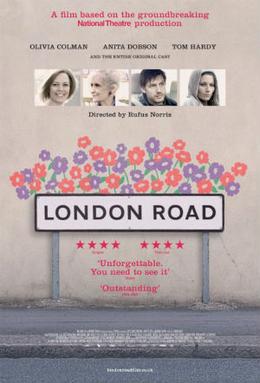
London Road (2015)

London_Road_poster.jpg


I went to see the revival of this play at the National Theatre last night and came away with mixed feelings. I couldn’t decide whether it was completely brilliant or simply baffling. So, I decided to download the film version to help me make up my mind.

The story centres on the murders of five sex workers (referred to as “prostitutes” in the film) and the community’s reaction in Ipswich. The dialogue and lyrics ( it's a sort of documentary-style musical) are taken verbatim from interviews with local residents, conducted over a three-year period covering the time of the murders, the ensuing trial and the community's eventual coming together. It’s a quirky, unconventional piece which is like nothing I’ve ever seen before. The words of the locals, including their hesitations, stumbles and overlapping speech, are delivered in a semi-musical, sing-song manner, not quite sung, not quite spoken. It’s a fascinating way to tell the story, but also a perplexing one.

What struck me most was the range of reactions from the community. Some residents seemed more concerned about Ipswich becoming the focus of outside attention than about the victims and their families. Others were shockingly unsympathetic, one even expressing relief that the murders happened because of the nuisance the sex workers caused.

I still haven’t decided whether I liked it or not, but it’s completely engrossing and unlike anything I’ve seen before.
 
Top